
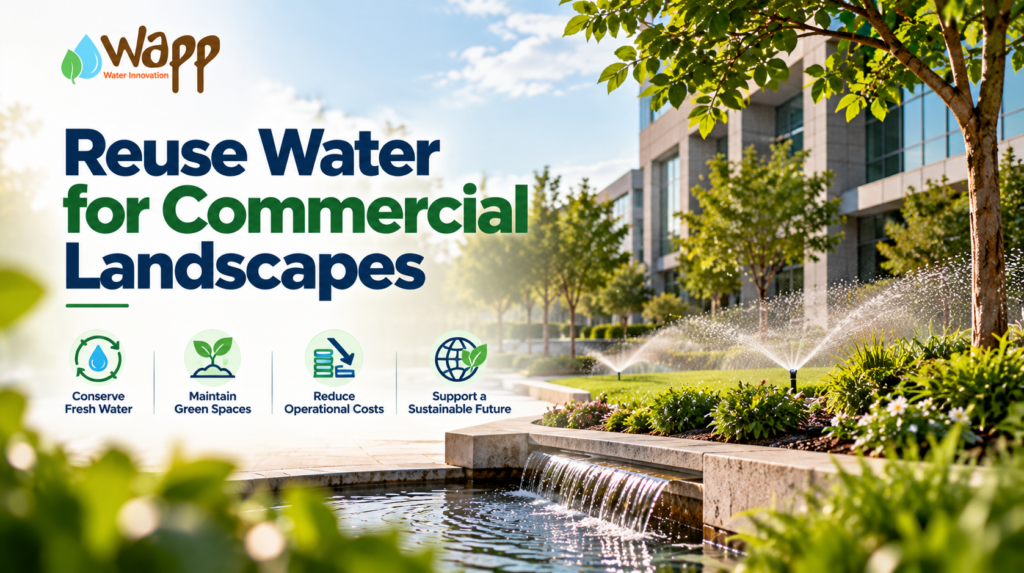
Learn how commercial buildings can reuse treated wastewater for landscaping through proper treatment, quality checks and smart monitoring. Plan a sustainable water system today.
Can Treated Wastewater Keep Commercial Landscapes Green?
Commercial buildings use considerable water to maintain lawns, gardens, entrance areas and outdoor green spaces. During warmer months, irrigation requirements can increase, placing additional pressure on freshwater supplies and facility budgets.
However, landscaping does not always require fresh drinking-quality water. Commercial properties can explore treated wastewater as an alternative irrigation source when the treatment process meets the required quality standards and local regulations.
The opportunity is not simply to redirect wastewater towards gardens. Buildings need a carefully planned reuse system that considers water quality, irrigation methods, storage arrangements and ongoing monitoring.
Start with the Right Wastewater Source
Before introducing treated water into landscaping, facility managers should understand where the wastewater originates. Commercial properties may generate wastewater from washrooms, kitchens, cleaning activities and other building operations. Its composition can vary depending on occupancy, business activity and cleaning practices.
A technical assessment helps determine whether existing wastewater treatment solutions can produce water suitable for the intended landscaping application.
For example, treated water intended for garden irrigation should be evaluated for relevant parameters such as suspended solids, organic load, salinity and other site-specific quality requirements. The acceptable limits depend on local regulations, soil conditions and the plants being maintained.
Design Irrigation Around Reclaimed Water Quality
Not every plant or landscape area responds equally to reclaimed water. Water containing unsuitable salt levels or other contaminants may affect soil conditions and plant growth over time. Commercial property managers should therefore coordinate treatment quality with landscaping requirements.
A practical reuse plan should consider:
- Plant selection: Choose vegetation compatible with the quality of available treated water.
- Irrigation methods: Consider drip irrigation or other suitable systems that reduce unnecessary water contact and evaporation.
- Storage arrangements: Use appropriately designed tanks to maintain water availability and prevent contamination.
- Separate pipelines: Keep reclaimed-water networks clearly separated from potable-water infrastructure.
- Application schedules: Adjust irrigation according to weather, soil moisture and seasonal plant requirements.
A qualified water treatment company India can assess the existing plant and recommend suitable improvements for a commercial property’s reuse requirements.
Monitor the Reuse System Instead of Relying on Guesswork
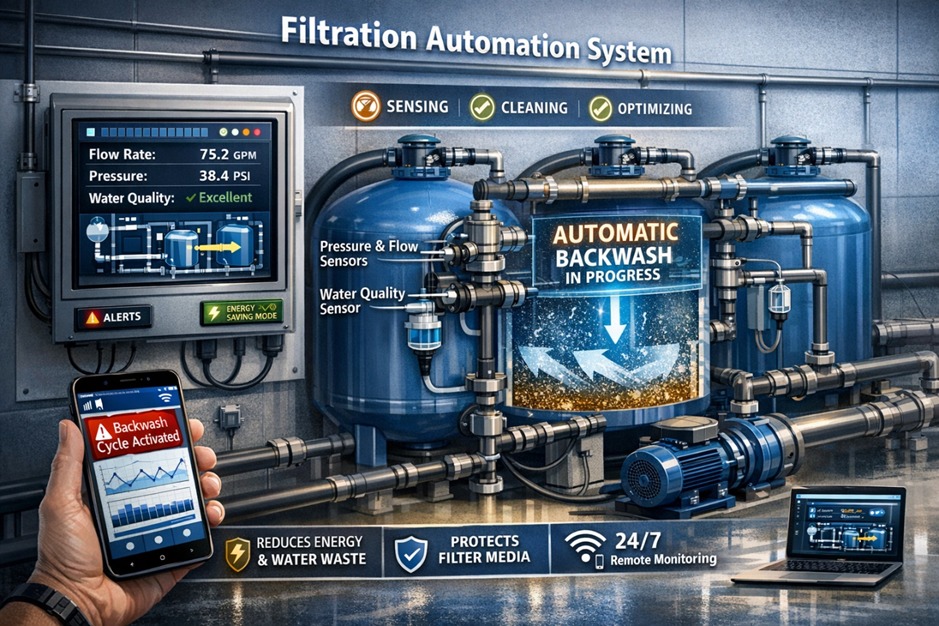
A reclaimed-water system needs consistent supervision. Changes in incoming wastewater or treatment performance can affect the quality of water supplied to landscaping areas. Smart water management technology can help facility teams monitor water consumption, storage levels and irrigation schedules.
With suitable IoT water management systems, connected sensors and meters can provide information about tank levels, flow rates and possible distribution irregularities. This helps maintenance teams identify unusual conditions and investigate potential water losses. Monitoring can also help property managers compare irrigation demand across different landscape zones and avoid excessive watering.
Keep Treatment Equipment Ready for Continuous Reuse
A landscaping reuse system depends on the performance of the treatment plant behind it. Regular water treatment plant operation & maintenance helps maintain process stability and supports reliable water recovery. Maintenance planning should cover filtration, pumps, disinfection equipment, storage tanks, pipeline inspections and water-quality testing.
Where commercial buildings generate specialised wastewater, experienced effluent treatment providers may be required to address additional treatment needs. Professional sewage treatment plant services can also support properties that depend on sewage treatment and reclaimed-water distribution.
Some large facilities may evaluate zero liquid discharge solutions as part of a broader resource-recovery strategy. However, ZLD is a separate and more complex treatment approach; it is not automatically necessary for landscaping reuse.
Frequently Asked Questions
1. Is treated wastewater safe for commercial garden irrigation?
It can be suitable when treatment produces water that meets the applicable quality requirements for the intended use. Testing and monitoring are essential before and during reuse.
2. Can treated water be used for lawns and ornamental plants?
Yes, where water quality is appropriate for the selected plants, soil conditions and irrigation method. Property managers should obtain a technical assessment before implementation.
3. Does landscaping reuse require separate plumbing?
Yes. Reclaimed-water distribution should be designed separately from potable-water systems, with suitable identification and safeguards to prevent cross-connections.
4. How can commercial buildings reduce irrigation wastage?
Buildings can use drip irrigation, moisture-based scheduling, leak inspections and suitable monitoring systems to avoid unnecessary watering.
5. Does every commercial building need a new treatment plant?
Not necessarily. An assessment of existing treatment capacity, wastewater quality, reuse demand and infrastructure can establish whether the current system needs modification or a new installation.
Make Landscaping Part of a Smarter Water-Reuse Strategy
Commercial landscaping can become an important part of a building’s water-recovery plan. With appropriate treatment, separate distribution, quality testing and regular maintenance, properties can reduce freshwater use for suitable outdoor applications.
Enhanced Wapp Systems India Pvt. Ltd. supports water and wastewater management requirements through treatment and operational expertise. A site-specific assessment can help commercial facilities understand their water-reuse potential and infrastructure needs.
Planning to reuse treated water across your commercial property? Connect Wappsys teams with water management experts to assess your treatment system and landscaping requirements.