

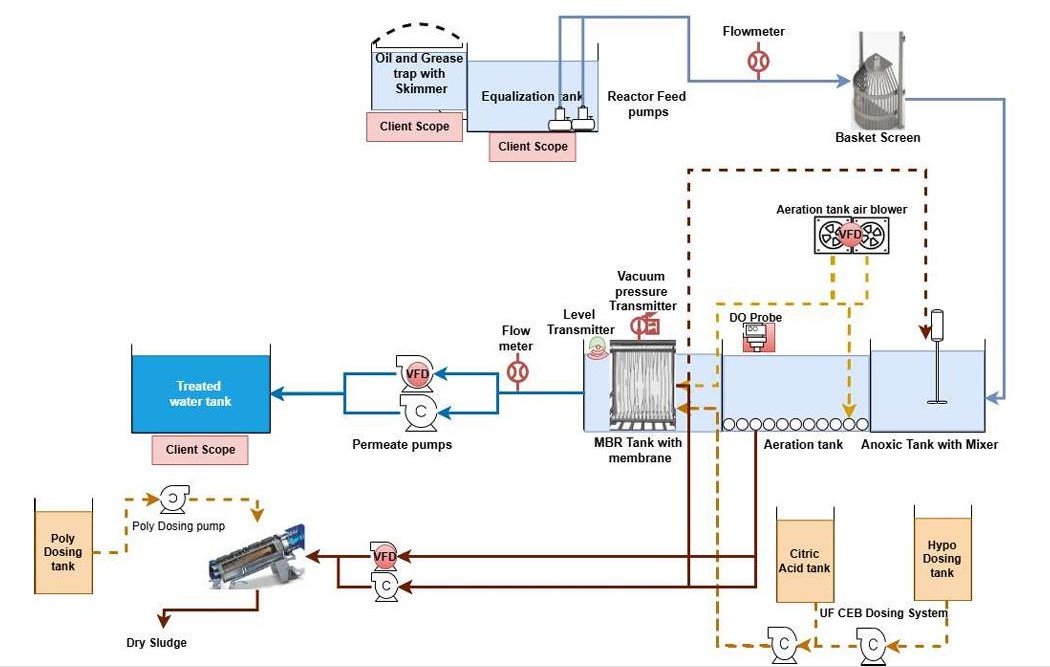
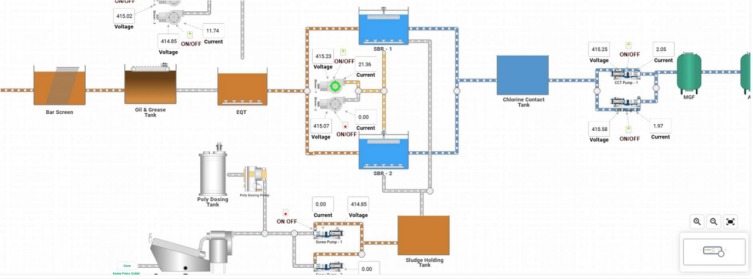
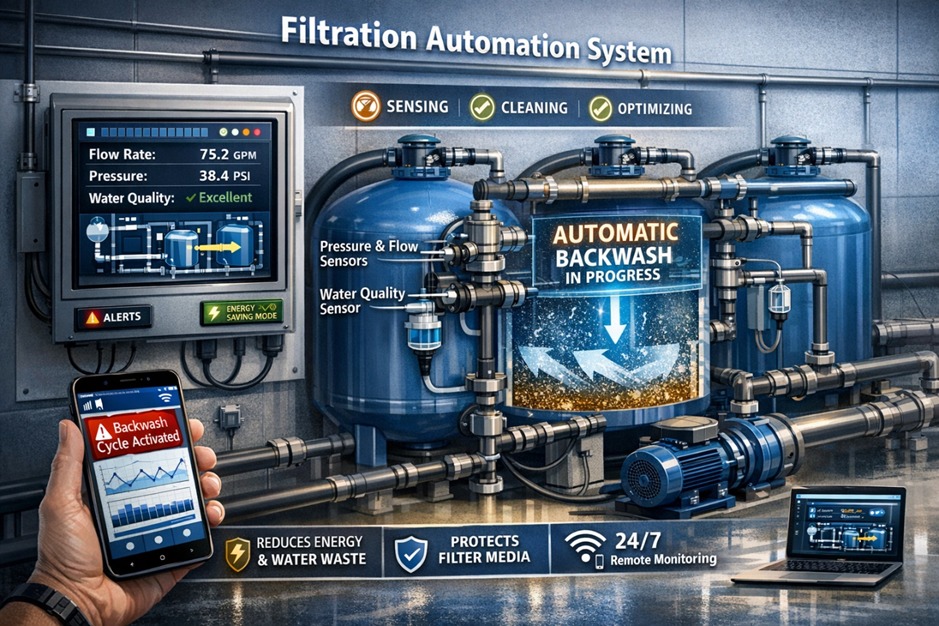

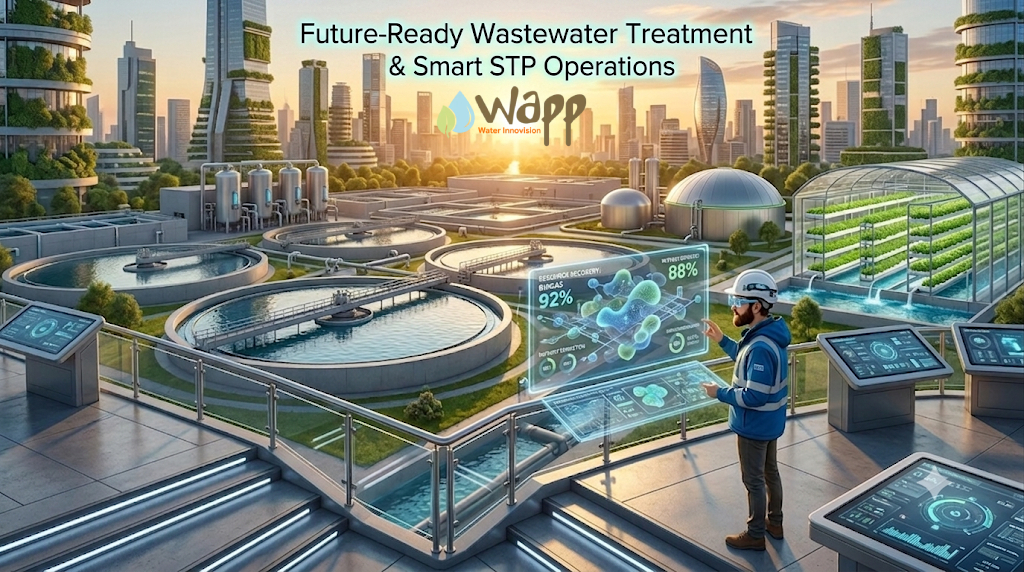
Prepare your facility for changing water demands with smarter wastewater treatment, STP maintenance, recycling, and reliable operation support. Get expert guidance today.
The Future of Wastewater Operations
Treatment plants face changing demands as businesses expand, water consumption patterns shift, and sustainability becomes a larger operational priority.
A plant that performs adequately today may require better monitoring, maintenance, or process optimization tomorrow. Facility managers therefore need to look beyond immediate repairs and consider how their treatment infrastructure can remain reliable over its operating life. A future-ready approach combines technical assessment, disciplined operation, equipment care, and opportunities for water recovery.
What Should a Facility Evaluate?
Instead of asking whether a treatment plant is old or new, facility teams should examine how effectively it performs.
- Treatment performance: Review treated-water quality, process stability, sludge generation, and variations in wastewater loading.
- Equipment condition: Check pumps, blowers, dosing systems, electrical components, and other critical machinery for recurring problems.
- Operational efficiency: Evaluate energy consumption, chemical usage, downtime, and maintenance frequency.
- Reuse potential: Identify whether appropriately treated wastewater can support suitable non-potable applications.
This assessment creates a practical foundation for improving wastewater treatment without automatically replacing the complete system.
From Maintenance Contract to Performance Management
Traditional maintenance often focuses on repairing equipment after problems occur. Modern facilities need a more proactive operating model. Professional STP operation maintenance services can combine routine inspections, process monitoring, preventive servicing, and technical intervention.
An STP AMC can establish defined responsibilities for recurring maintenance and operational assistance. Meanwhile, an experienced STP maintenance company can help identify equipment deterioration before it creates major disruption. The objective should remain simple: keep the plant dependable, efficient, and suitable for changing operational requirements.
Where Water Recycling Fits?
Wastewater does not necessarily represent the end of the water cycle. With appropriate treatment and quality control, water recycling can support approved non-potable applications. This can help facilities reduce freshwater dependence and make better use of existing resources.
However, recycling decisions should follow a technical evaluation rather than a one-size-fits-all approach. Flow volume, wastewater characteristics, intended reuse, treatment quality, and applicable requirements all influence the right solution. This is where coordinated water management services become valuable.
Delhi Facilities Need Site-Specific Expertise
Every facility has different wastewater characteristics and operational challenges. Businesses searching for a wastewater treatment company Delhi should therefore evaluate technical capability, site experience, maintenance systems, and operational support. Professional water treatment services can address plant performance, process optimization, and infrastructure requirements.
Similarly, effective sewage treatment depends on consistent process control and appropriate operating practices. A structured operation & maintenance services programme can bring these activities together while supporting long-term plant reliability.
A Future-Ready Plant Should Be Able to
Monitor → Identify → Optimize → Maintain → Recover → Improve
This continuous cycle helps facility teams move away from breakdown-driven decisions and toward measurable operational improvement.
Questions Facility Managers Often Ask
- Can an existing treatment plant become more efficient?
Yes. Process optimization, equipment improvements, monitoring, and preventive maintenance can improve performance when the underlying infrastructure remains suitable.
- Is an STP AMC useful for commercial facilities?
Yes. It creates a defined framework for scheduled servicing, inspections, technical assistance, and maintenance responsibilities.
- How does recycling support water management?
Appropriately treated wastewater can support approved reuse applications, potentially lowering freshwater requirements.
- When should a facility seek professional assessment?
Consider an assessment when operating expenses increase, equipment failures become frequent, treatment results fluctuate, or facility demand changes.
Industry Perspective
Future-ready wastewater management requires more than installing treatment equipment. It requires continuous technical oversight and a clear understanding of how water moves through the facility. Enhanced Wapp Systems India Pvt. Ltd. supports organizations with wastewater treatment, plant operation, maintenance, recycling, and broader water management requirements based on individual site conditions.
Review your existing treatment infrastructure with a professional technical assessment and identify practical opportunities for better performance, maintenance, and water reuse.