




Learn how healthcare water treatment, wastewater recycling, and smart water management improve hospital sustainability and operational efficiency.
Modern hospitals require advanced water infrastructure because patient safety, infection control, environmental compliance, and operational continuity all depend on reliable water systems. By integrating healthcare water treatment, wastewater treatment and recycling, and intelligent monitoring, healthcare facilities can reduce water consumption, improve compliance, and strengthen long-term sustainability.
Why Does This Matters for Healthcare Infrastructure?
Hospitals consume thousands of litres of water daily across intensive care units, operating theatres, laboratories, dialysis centres, laundries, kitchens, and cooling systems. Every litre of water must meet quality standards while supporting uninterrupted healthcare services.
As healthcare infrastructure expands across India, administrators increasingly prioritize sustainable water strategies that balance operational efficiency with environmental responsibility. This shift reflects evolving wastewater treatment sustainability trends, where hospitals focus on water reuse, digital monitoring, and resource optimization.
Expert Insight: Building a Smarter Water Ecosystem
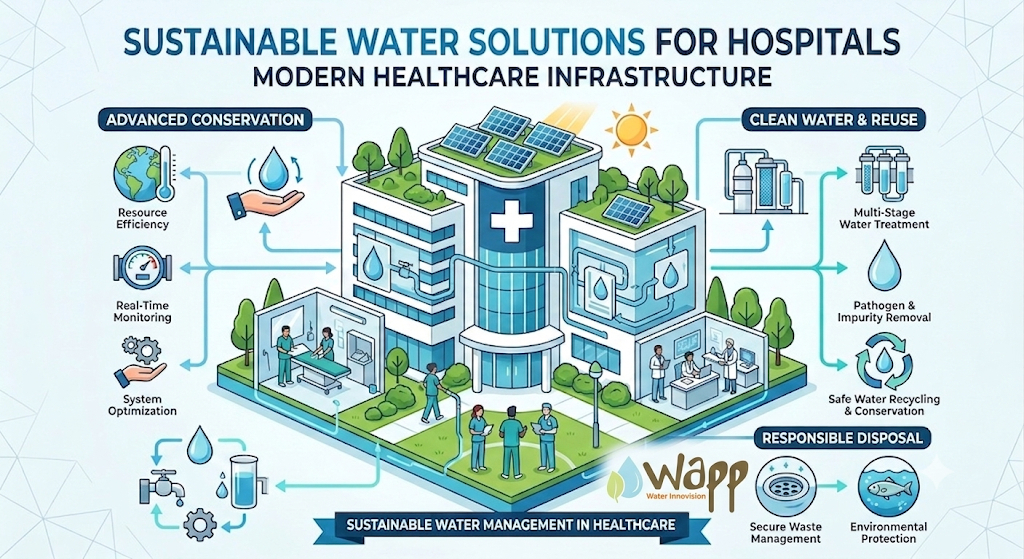
A future-ready hospital requires more than individual treatment units. It needs an integrated ecosystem where water supply, treatment, recycling, monitoring, and wastewater management work together.
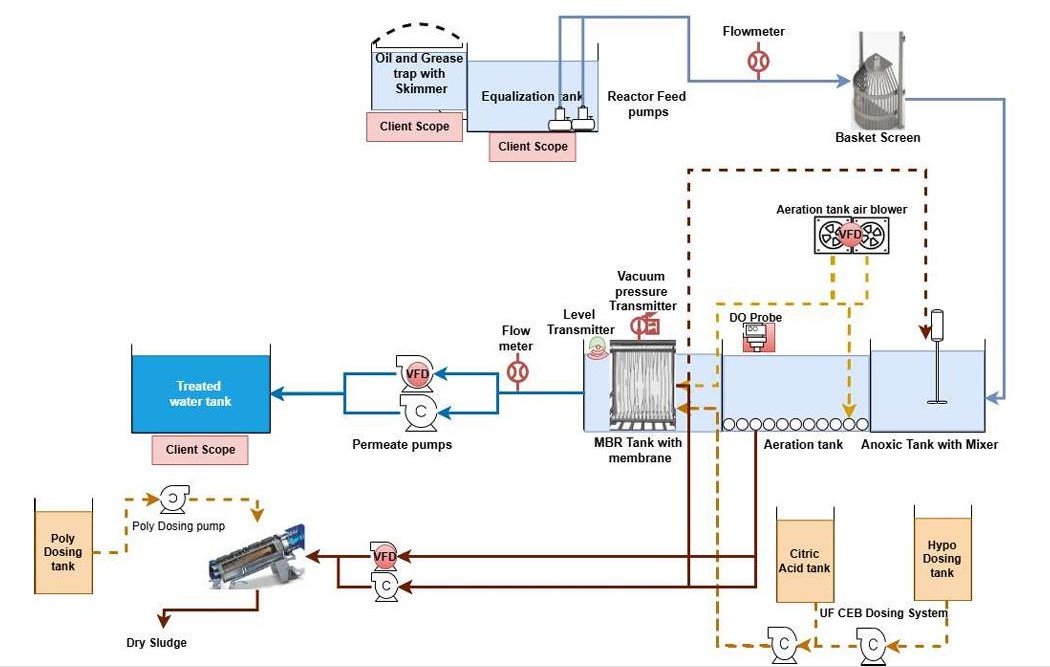
Advanced healthcare water solutions improve water quality across critical operations while reducing operational risks. At the same time, effective healthcare sewage treatment protects public health by treating wastewater generated from patient wards, laboratories, kitchens, and support facilities.
Healthcare organizations also benefit from professional wastewater management services, which include system design, performance optimization, preventive maintenance, and long-term operational support.
Technology Driving the Next Generation of Water Management
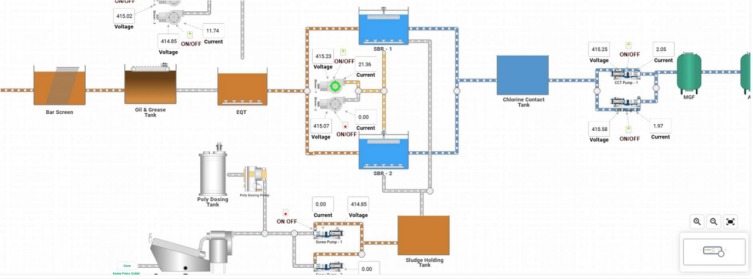
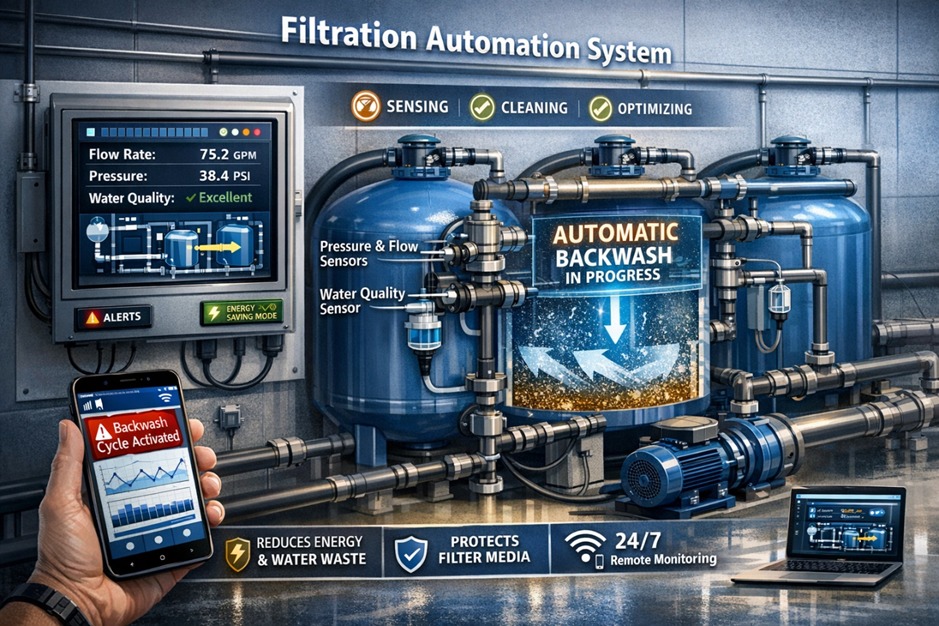
Digital engineering continues to transform healthcare infrastructure. Recent wastewater treatment innovation trends include automated monitoring, predictive maintenance, intelligent process control, and real-time performance analytics. These technologies help engineering teams identify issues early, improve treatment efficiency, and reduce unexpected downtime.
Similarly, evolving wastewater treatment trends encourage hospitals to adopt advanced recycling systems that support sustainable water management while reducing dependence on freshwater resources.
Large medical campuses often integrate engineering principles used in industrial water management solutions to improve operational reliability and optimize resource utilization across complex utility networks.
Action Checklist for Healthcare Decision-Makers
Before selecting a water management partner, healthcare organizations should evaluate:
✔ Experience with hospital water infrastructure
✔ Expertise in healthcare water treatment
✔ Proven wastewater treatment and recycling capabilities
✔ Long-term wastewater management services
✔ Knowledge of advanced automation and sustainability practices
Healthcare providers searching for the best water treatment company in India should focus on technical capability, lifecycle support, regulatory understanding, and project experience. Organizations such as Enhanced Wapp Systems India Pvt. Ltd. develop customized water strategies that help hospitals improve efficiency, compliance, and sustainability.
1. Why is healthcare water treatment important?
It ensures safe water quality for medical procedures, laboratories, patient care, and essential hospital operations.
2. What are the latest wastewater treatment innovation trends?
Automation, predictive monitoring, advanced recycling technologies, digital analytics, and intelligent treatment optimization.
3. How does wastewater treatment and recycling benefit hospitals?
It reduces freshwater consumption, supports sustainability objectives, and enables safe reuse of treated water for approved non-clinical applications.
4. Why do hospitals require wastewater management services?
Professional services improve system performance, maintain regulatory compliance, and support long-term operational reliability.
Conclusion
Healthcare facilities require intelligent water infrastructure that delivers operational reliability, environmental compliance, and sustainable growth. By integrating healthcare water solutions, healthcare sewage treatment, wastewater treatment and recycling, and advanced wastewater management services, hospitals can build resilient systems prepared for future challenges. Healthcare organizations seeking scalable and future-ready infrastructure often collaborate with Enhanced Wapp Systems India Pvt. Ltd. to implement innovative water management solutions that align with modern healthcare requirements.